

TXSTMcCOY MAGAZINE
Not-So-Sure
Bet
A new study finds investors are increasingly treating stock options like gambling
by David Kallison
Dr. Yifan Liu sent his colleague Dr. Matt Flynn a story he thought he might be interested in. The story discussed the people who were betting on cryptocurrencies, not in a buy-low/sell-high investment manner but simply betting on if the price of crypto would go up or down. Like traditional sports bets, there were big wins — and big losses. Flynn then found a message board celebrating these losses. He was astounded.
“It’s like buying a new car and then crashing it and being like, ‘Haha, that was worth so much money,” says Flynn.
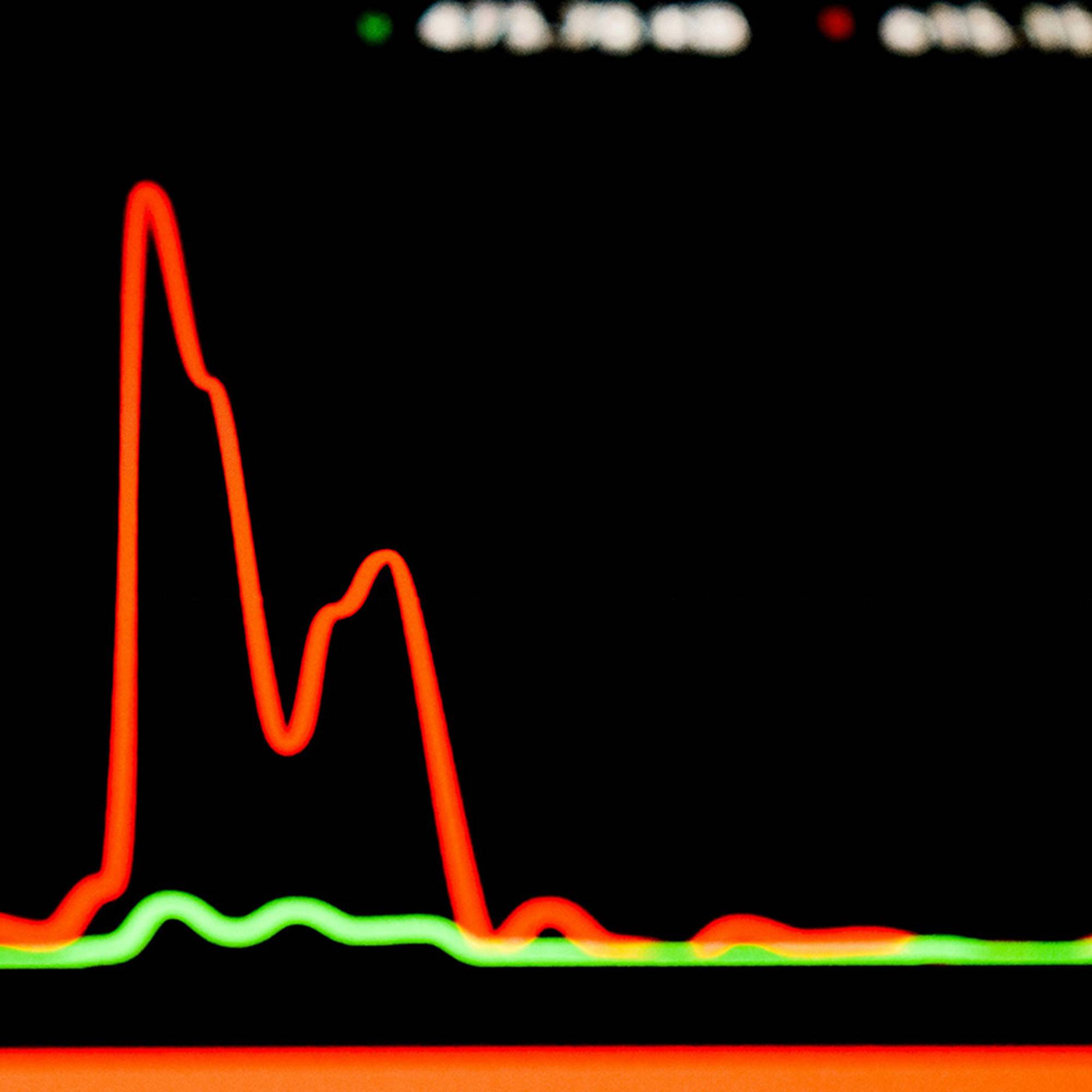
Thread after thread showed screenshots of graphs with one thing in common: the line, no matter where it started, ended by plummeting precipitously. The tops of the graphs reported the day’s activity: down $75,000 or the value of a brand-new Audi A6. He saw similar reports of loss: $63,000, $46,000, even $100,000 — all accompanied by the same nonchalant attitude of someone who had just lost a couple of bucks on a friendly wager.
Flynn relates to one story that stuck with him. He watched online as a guy had made nearly half a million trading options. Flynn recognizes that the majority of these profits were gained from good luck, the tail of a normal distribution curve. He brags about his “winnings” and then bets it all on one option and loses like 40 percent of his account in one day. $185,000 dollars in one day, gone,” Flynn recounts.
Flynn wanted to know more but one thing was certain: the betting that Liu had found in the crypto market was absolutely happening in the options market as well.
For the non-econ majors: options are when you pay a small fee for the option of either buying or selling a stock at its current price, but at a later date. Essentially, you’re betting on if a stock will go up or down by a specific time. It’s a complex financial instrument and in unskilled hands, it can be catastrophic for your bank account.
This discovery was the origin of the paper “Do Retail Traders Gamble on Stock Options?” authored by Flynn, Yiu, and Dr. Ivilina Popova and recently published in the Journal of Financial Markets.
Liu approached the study from his work on addiction; he had previously conducted research examining substance addiction.
“I have switched my interest from substance addiction to gambling because behavior is more important and less researched,” Liu says.
The years since the pandemic have also seen the rise of retail traders, ordinary citizens trading stocks for themselves and not on behalf of institutions. The GameStop short squeeze of 2021, dramatized in the film "Dumb Money" (and on endless podcasts), saw an increase in retail traders outmaneuvering the professional legacy traders, and earning millions in the process. This David vs. Goliath story drew an influx of retail traders essentially using the option mechanism as a gambling tool, whereas the professionals use options on an insurance basis. The cadre of flippant “loss-ers,” Flynn found online, were all part of the retail traders who now make up as much as 20% of the trading population, a nearly 50% increase from the previous year.
The paper’s own authors disagree on the reason for this lottery-style behavior. Flynn believes options betting are primarily for entertainment purposes. There is evidence to support it. The authors found that in states with more permissive online sports betting rules, there were less instances of options betting.
“When all of a sudden, you can’t afford a house, your jobs are replaced by AI, but you have some small amount of cash. What would you do? Gamble.”
— Dr. Yifan Liu
“In this study we also showed that when states passed a law to allow sports gambling, our results actually weakened, which means those gamblers shifted their attention from the stock options market to sports gambling when they are allowed,” Liu says.
With other entertainment options available, people turned less to options betting for their gambling fix. People don’t want to gamble options specifically— they just want to gamble, period.
Liu sees it differently. He sees options gambling originating not from entertainment but from desperation, with normal folk using these financial tools as lottery tickets, a last-ditch attempt to capture the life that society had promised back when they were kids — a house, a job, security, safety. In essence, a dream that is no longer accessible to them. Not a game, but a lifeline. A desperate act disguised as a parlor game.
He’s working on a broader theory along these lines.
“I have this assumption that when income inequality reaches a certain point, people—especially young people— become excessively risk seeking,” Liu says.
He continues: “When all of a sudden, you can’t afford a house, your jobs are replaced by AI, but you have some small amount of cash. What would you do? Gamble.”
Wherever the answer lies, there’s sure to be more of it. The sports betting world has exploded in recent years. Americans placed $167 billion worth of bets last year, an increase of 11% from 2024. Even the rise of prediction markets like Kalshi (where you can bet on what a politician will emphasize in their speech or how many streams Sabrina Carpenter will rack up this week) are due to 90% of their books being sports bets.
The authors are eager to dig in and do more research considering how frequently these trends change. But whatever the true reason, these options are almost sure to increase in popularity and volume over the next few years. You can bet on it.
David Kallison is the digital marketing strategist at the McCoy College for Business.