

TXSTMcCOY MAGAZINE
India
up close
McCoy College students travel to India for an immersive cultural and professional experience
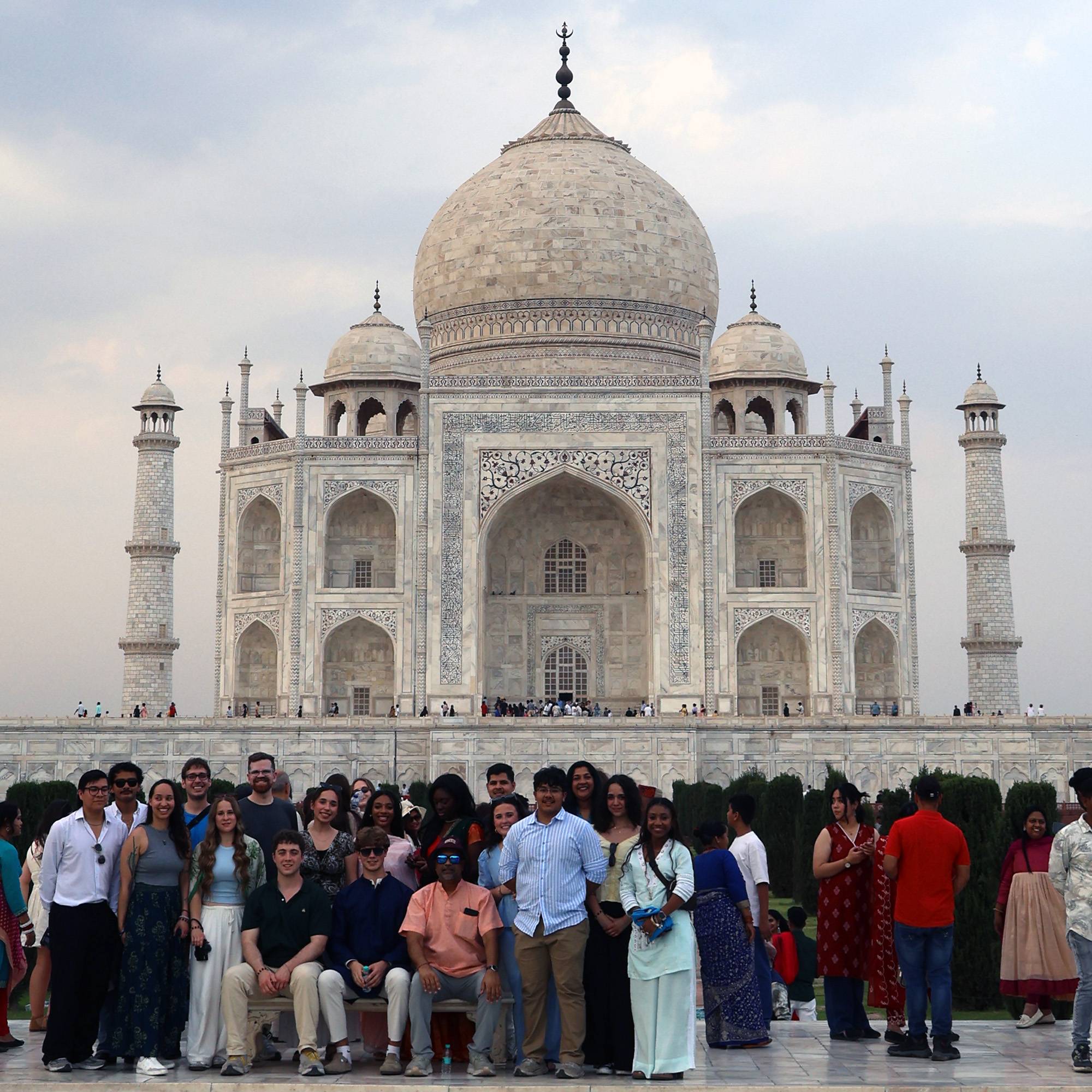
At 3 a.m., just hours after landing in Hyderabad, India, a group of Texas State University students stepped into one of the business cities in the world. They were jet-lagged, slightly disoriented, and immediately met with a pace of life unlike anything they had experienced before.
For students in the Dick Burdick Dean’s Leadership Academy (DLA), that moment set the tone for a 10-day immersive experience that would go beyond a typical study abroad trip. The program’s first international excursion — which was funded through the Emerson Global Scholars endowment — brought a cohort of 15 top McCoy College of Business juniors and seniors to Hyderabad and New Delhi for a mix of corporate tours, cultural exposure, and learning about one of the world’s fastest-growing economies.
“My first impression, just getting out of the airport, was that it was very busy,” says Jude Kessler, a marketing and honors student. “There’s a lot going on. It’s almost like a beehive.”
That initial impression of frenzied motion — crowded streets, constant motion, and a pace that didn’t slow — became a rhythm. Students began to see how that high energy translated into productivity, innovation, and a deeply ingrained work ethic that shapes daily life and business culture in India.
The cohort, led by Dr. Sanjay Ramchander, dean of McCoy College, and Dr. Seth Frei, assistant dean and chief of staff at the college, visited organizations ranging from multinational corporations such as Salesforce and Dr. Reddy’s Laboratories — which supplies a large portion of the United States’ generic pharmaceuticals — to mission-driven enterprises such as Goonj, a Delhi-based nonprofit that repurposes urban surplus materials such as donated clothing to support underserved communities. The locations intentionally exposed students to the scale of global business within India and the localized impact of social innovation.
During a visit to LV Prasad Eye Institute, a comprehensive eye health facility and World Health Organization Collaborating Center for Prevention of Blindness, students observed a tiered payment model in which patients who couldn’t afford care were able to receive it, despite economic circumstances at either a discounted rate or free and patients who could afford treatment helped subsidize care for those who could not.
“I think they're a very collaborative culture in a way that we don't have here,” says Kessler. “It's less pull yourself up by your bootstraps and more of a willingness to extend the hand to people."
At T-Hub, the world’s largest startup hub, students experienced firsthand how emerging startups operate within collaborative environments that promote resource sharing.
“It was an unimaginable opportunity to be exposed to international businesses,” says Imoya Lovelady, a marketing student preparing to pursue an MBA in international business at McCoy College.
The experience made some students realize that global business isn’t distant or abstract and that it’s impacting the U.S. economy in ways many hadn’t considered before. For example, students learned that nearly half (approximately 47%) of the U.S.’s generic pharmaceutical supply is actually produced in India, which shifted how they thought about supply chains and just how dependent the global system really is.
“I assumed that the U.S. produced its own pharmaceuticals,” she says. “They told us [the U.S.] can't have over-the-counter prescription drugs or generics without India. So having that perspective and seeing the marketing that played a big role in global pharmaceuticals helped.”
Frei emphasizes that global leadership requires more than technical knowledge. It demands adaptability, cultural awareness, and the ability to engage meaningfully despite differences.
“Anytime we take students outside of the classroom to a location that is significantly different than what we experience here in the U.S., it gives them an opportunity to expand their world view and their understanding of how business and commerce happen around the world,” Frei says.
That learning carried over into communication, too. Throughout the trip, students engaged directly with executives, entrepreneurs, and community leaders, building confidence in asking strong questions and in navigating conversations across different cultural settings.
“They did an excellent job of asking questions and interacting,” Frei says. “I think it's all these interactions, whether small or large, whether more formal or as a part of the program, or more informal interactions outside the actual scope of the program. That helped round out a student's ability to interact and communicate with people from around the world.”
By the end of the trip, students felt the experience's impact both professionally and personally. Students who once saw their careers through a primarily domestic lens began to consider the possibilities in a global economy.
“It has ignited a desire in me,” says Kessler. “I want to be a global citizen. I want to work abroad for at least a year or two. Before this, I don't know that I would have seen the importance in that, but now I don't think I'd be able to do my career without going international at some point.”
Some of the students' most memorable moments were rooted in the cultural immersion. From exploring the stalls at the Charminar bazaar — a busy, historic market surrounding the 1591 Charminar monument — to sharing meals and learning about traditional customs, students encountered a culturally unfamiliar yet inviting environment. Lovelady describes gaining a new perspective on food and connection through cultural practices such as eating with her hands.
“They explained to us how sacred it is to share a meal with someone and the level of comfort that you have when using your hands,” she says. “It's rooted in religious sentiment about having that connection and engaging with the blessing of being able to consume food, because not everybody has this opportunity.”
Experiences like visiting the Taj Mahal and Agra Fort gave students a deeper sense of history and a better understanding of the cultural influences that shape both people and markets. Lovelady says understanding the true love story behind them deepened her appreciation for their beauty, making it an unforgettable experience.
“It’s hard to explain because it's such an intense emotion, being able to see that wonder of the world and learn the history behind it,” she says. “When you go there, and you see how intricate the details are — all the symmetry, all the beauty of Agra Fort and the Taj Mahal — it's a feeling. You feel it in your heart.”
Kessler says he was struck by the depth of passion he encountered all around him.
“People in India feel so passionately about life, about the music, the meals that they share with each other, and the clothes they wear,” he says. “Everything is so big, extravagant, and colorful.”
For Lovelady, the experience was a once-in-a-lifetime opportunity, she says, that may not have been possible outside of Dick Burdick's DLA.
“I definitely got a very unique experience that I don't feel can be easily replicated,” she says.
As McCoy College looks ahead, the success of the inaugural trip is already evident. What began as a philanthropic investment in global exposure has quickly become a defining experience that expands how students think, where they see opportunity, and how they prepare to lead as citizens of the world.
“This was a landmark moment,” says Frei. “There were some challenges along the way, but overall, students had an excellent opportunity to experience a culture that none of them expected to encounter a year ago. They were able to develop strong business connections, but also, most importantly, strong personal connections with each other within the network they built among this group of 15.”
For many in the cohort, the trip reframed their understanding of the world and their place in it.✯
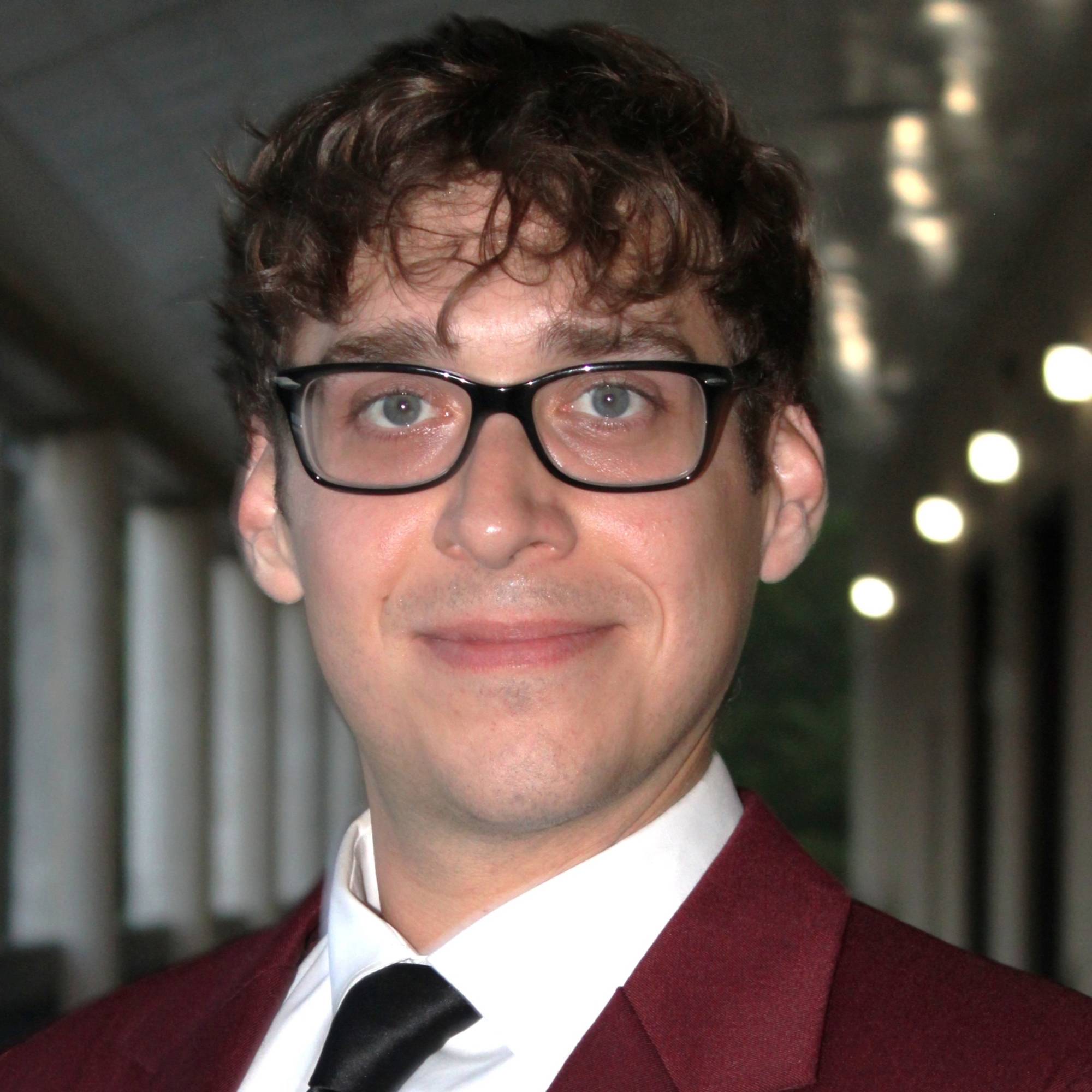
Drake Touve
Traveling to India was a fantastic, inspiring, and truly monumental experience. The deep connections I made with my colleagues and deans are incredibly rare, and I am still humbled to have been a part of it.
We had the pleasure of visiting many different businesses, start-ups, and non-profits that help increase value in India’s future. The hospitality that I felt while immersed was filled with curiosity, humor, and gratitude.
A recurring theme of the trip showcased how the trajectory of a community can change when a lack of a basic need is identified, proving that ambition can grow local aid and nourishment exponentially. The differences in culture, but the similarities in the human connection, are profound. Seeing this drive to strengthen the resources for those around them, in an area where opportunity is harder to come by, enlightened me to seek the same back home.
Ultimately, I feel deeply grateful that our cohort was able to share a unique perspective of the country that few ever get to witness. Experiencing a culture separate from your own is vital, not just for expanding your awareness, but for an appreciation of the richness that our differences entail.
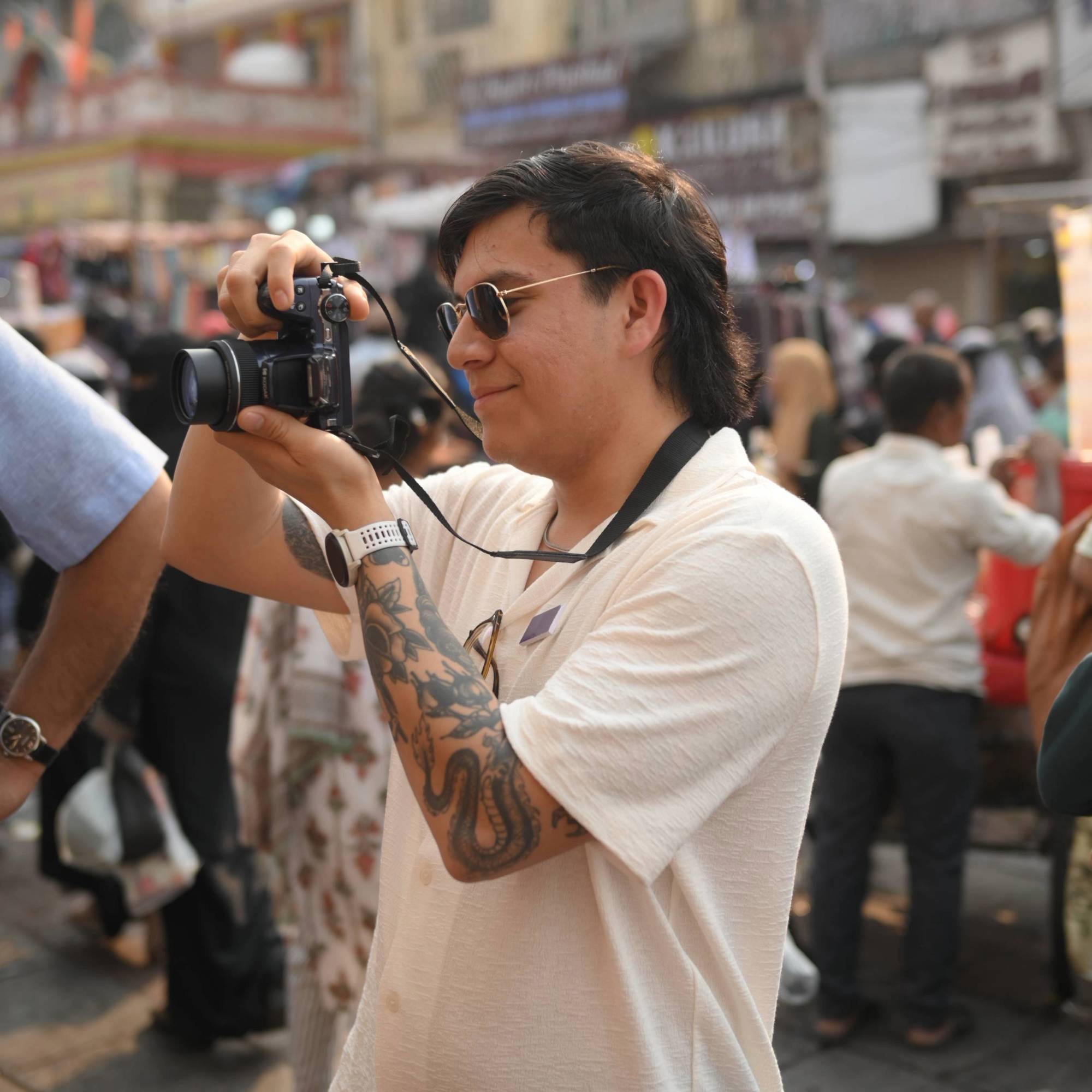
Lorenzo Quiroz
When I first heard that we were going to India, my initial reaction was not pure excitement. Honestly, it was a mix of curiosity, uncertainty, and a little bit of nervousness. I remember thinking, “What is in India? What does it look like? How different is it from home?” I had never been outside of the United States, so the idea of flying across the world felt huge and a little unreal. At the same time, there was this spark in me that was really open to trying something new. I knew this was a rare opportunity, and even though I did not know exactly what to expect, I felt a quiet kind of excitement starting to build.
The travel itself was an emotional experience. We left Austin at 5 a.m. on March 12, and as we got on the first flight I felt a mixture of sleepiness, adrenaline, and disbelief that this was actually happening. Each layover and each new plane made the world feel bigger and smaller at the same time. Bigger, because I realized how far we were going. Smaller, because I was surrounded by classmates and faculty who made me feel safe and supported. By the time we were on our third and fourth flights, I was exhausted. My body was tired, my sense of time was completely off, and I remember looking out the airplane window, thinking, “I really left the country. I am actually doing this.” That thought filled me with a quiet pride.
When we finally arrived in Hyderabad around 3 a.m. on March 14, I was drained but also wide awake on the inside. Walking out of the airport into the warm air, hearing different languages around me, and seeing signs I could not read made me feel both out of place and very alive. It was like my senses turned up. I noticed the colors, the sounds, the energy. There was a moment where I realized I was very far from home, yet I did not feel afraid. I felt curious.
Stepping into the Taj Palace hotel was a huge comfort. The staff greeted us with such warmth and kindness that I immediately felt more relaxed. The lobby felt calm and welcoming, and that first night I remember feeling grateful that we had a place that felt like a safe home base. When I finally got to my room, I sat on the bed for a few minutes and just took a breath. I thought about how long the journey had been and how it was only the beginning. I felt tired, but also deeply thankful and excited for what the next days would bring.
The food in India was another part of the experience that really stood out to me emotionally. I was excited but also a little nervous to try everything, because I had heard so much about how spicy Indian food can be. The first few meals at the hotel confirmed that. The food was definitely spicy, but in the best way. Each bite was full of intense flavor. Sometimes it made my eyes water a little, but I kept going back for more because it tasted so good. Eating those meals made me feel connected to the culture in a very real way, and I loved that food could make me feel challenged and comforted at the same time.
One of the most powerful parts of the trip for me was visiting Goonj. Goonj is an organization in India that takes surplus materials from cities, like clothing and household items, and turns them into resources and solutions for rural communities that need them most. When we arrived there, I felt a mix of curiosity and respect. As they began to explain what they do and how they operate, something in me softened.
Walking through their facility, I felt my heart being pulled in so many directions. On one hand, I was overwhelmed by how much need there is in the world. On the other hand, I was deeply moved by how Goonj responds to that need with creativity, dignity, and love. The founder and the staff carried themselves with such humility. They were not bragging about their work. Instead, they calmly showed us how they sort materials, repurpose them, and get them into the hands of people who truly need support. Their focus on dignity really stayed with me. It was not about charity in the way we usually think of it. It was about respecting people, valuing their labor, and meeting them where they are.
During the visit, I felt my chest tighten a few times. I kept thinking about how easily we throw things away in the United States and how those same items could change someone’s life somewhere else. It made me feel a mix of guilt, awareness, and motivation. I did not want to just feel sad and then move on. I wanted to carry that feeling back with me and let it influence how I think about waste, generosity, and community. When they welcomed us with food and took the time to answer our questions, I also felt incredibly honored. It meant a lot that they opened their space and their story to us.
Another impactful experience was our visit to the LV Prasad Eye Institute. It is one of India’s largest eye care facilities, and from the moment we walked in, I felt like I was stepping into a place where people’s lives are changed every single day. The building felt busy but very organized. As we were given the tour, I was struck by how smoothly everything seemed to run.
What moved me the most was their approach to access and payment. Eye care there is free for everyone who needs it. If a patient has the ability to pay, they can choose to do so and receive a few small perks, such as a more private waiting area. However, whether a person pays or not, the quality of care remains the same. That idea made a deep impression on me. I felt a combination of admiration and hope. It was powerful to see a system where people who have more can naturally help support the care of those who have less, without anyone being made to feel less worthy. It made the concept of equity feel real and concrete, not just like a word you hear in a classroom or in a mission statement.
As I walked through the institute, I thought about how life-changing sight can be. Something as simple as being able to see clearly can affect a person’s education, work, and independence. Knowing that this institution was providing that for so many people, regardless of their income, gave me a sense of both humility and respect. It reminded me of how much we can accomplish when systems are designed with compassion and fairness at the center.
Of course, one of the most unforgettable moments of the trip was visiting the Taj Mahal. Even before we arrived, I felt a buildup of anticipation. I had seen pictures my whole life, but there is always this question in the back of your mind. Is it really going to feel as special in person as it looks in photos? As we approached the site, I felt my heart beating a little faster.
Walking through the small tunnel right before you see the Taj Mahal was a moment I will never forget. There is this sense of suspense as you move forward, not seeing it yet but knowing it is right there. Then you step out of the tunnel, and suddenly it is in front of you. Huge. Bright. Perfectly symmetrical. The first few seconds, I honestly could not speak. I felt my breath catch. I had this mix of wonder, disbelief, and gratitude all at once. It felt almost unreal that something that beautiful actually exists in the real world and that I was standing in front of it.
As I learned more about the Taj Mahal being a mausoleum, a resting place built out of love and grief, the beauty of it took on a deeper meaning. It is not just a pretty building. It is a symbol of devotion and loss. Standing there, I felt very small in the best way. It reminded me how short life is and how powerful human emotion can be. It also made me feel incredibly thankful. Thankful that my path in life, at this exact time, led me all the way from Texas to that moment in India.
Looking back on the entire trip, I can honestly say it changed me. It stretched my comfort zone, opened my eyes to new ways of living and serving, and made the world feel both bigger and more connected. I felt challenged, inspired, humbled, and grateful all at once. There were moments when I missed home, but there were also many more moments when I did not want the experience to end, because I knew I was growing from it.
I am deeply thankful to the Dean’s Leadership Academy for creating this opportunity and believing in students like me enough to invest in our growth. I also want to give a special thank you to Scott Emerson. His generosity made it possible for this trip to be completely free for all of us, which is something I do not take lightly. Knowing that someone cared enough to fund our experience made me feel seen and supported, and it is a kindness I will always remember.
This trip to India is something I will carry with me for the rest of my life. It did not just show me another country. It helped me see myself, my privileges, and my responsibilities in a new light.